


![]() |
|
||
|
|
Shrink Fitting |
|
|
|
![]() |
|
|
|
||
Applications
|
Access helpful Application Notes after brief registration: |
|
|
|
||
Overview |
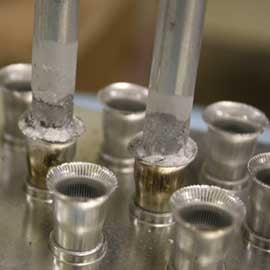
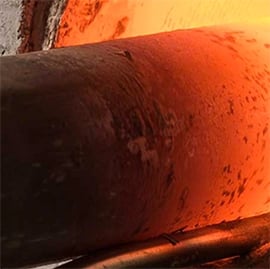
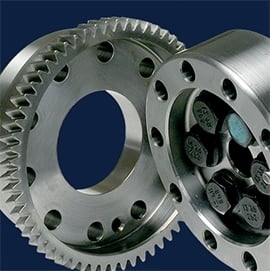
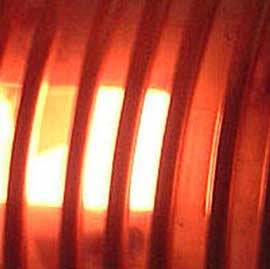
Shrink fitting is a procedure in which heat is used to produce a very strong joint between two pieces of metal, one of which is inserted into the other. Heating causes one piece of metal to contract or expand on to the other, producing interference and pressure which holds the two pieces together mechanically. Most applications involve a shaft with a given outside diameter and another part such as a gear, steering knuckle or washer which has a bore hole. There are several forms of this type of joint, characterized by the amount of tolerance (space) between the two parts. The shrink fitting process is used for the interference fit type joint. By heating the mass around the bore hole uniformly, it is possible to significantly expand the size of the hole. The shaft is then easily inserted into the expanded hole. Upon cooling, the mass around the hole shrinks back to its original size and frictional forces create a highly effective joint. |
|
|
|
||
Using Induction |
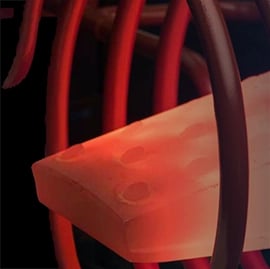
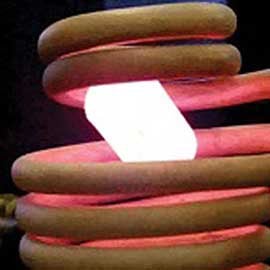
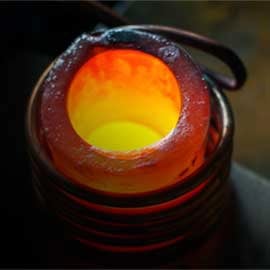
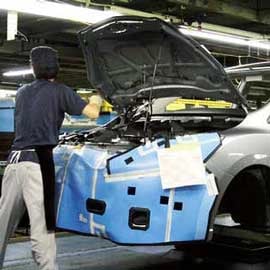
Modern induction heating systems provide the speed, accuracy and repeatability necessary to produce quality shrink-fitted joints. With a properly designed work coil, induction heating can uniformly heat the bore hole, producing repeatable expansion. With the remote heat station capability of solid state induction heating power supplies, shrink fitting can be done on the production line. Typical RF power supplies for metal to shrink fitting range from 1 to 20kW, depending on the parts and application requirements. |
|
|
|
||
Setup |
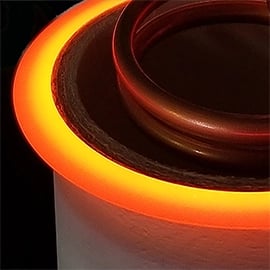
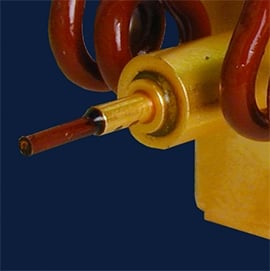
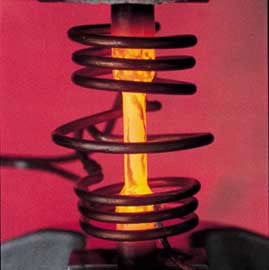
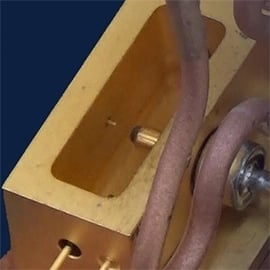
For induction shrink-fitting applications a pancake or helical-shaped coil is placed inside the metal part that is to be expanded. RF power is applied until the part reaches the appropriate temperature. The induction coil is then quickly removed from the hole and the shaft that is to be inserted is then slid into position. The assembly is then allowed to cool. Pressure develops as the heated component contracts. Depending on the mass of the material to be expanded, a pancake-shaped coil is sometimes employed. |
|
|
|
||
Materials Needed |
Metal parts: metal housing material with a tight tolerance opening; insert for housing (tight tolerances on the outer diameter are also important) |
|
|
|
||
Common Problems |
|
|
|
|
||
Tricks Of The Trade |
|
|
|
|
updated:
|
|
|
©1987-2008 Ameritherm Inc. - precision induction heating 39 Main St., Scottsville, NY 14546 USA, All rights reserved
Tel: 1-585-889-9000 Fax: 1-585-889-4030 info@ambrell.com |
|